
In the book of Psalms there is a run of fifteen psalms labeled as “Songs of Ascent.” According to tradition, and inferred from the content of the songs, these were sung by Israelites ascending the mountain up to Jerusalem for the feast days of worship in the temple. Four of these fifteen psalms are attributed to David, including what I would consider the prime example embodying the purpose of the Songs of Ascent: Psalm 122.
Psalm 122:1-9 (ESV)
I was glad when they said to me, “Let us go to the house of the Lord!” Our feet have been standing within your gates, O Jerusalem!
Jerusalem—built as a city that is bound firmly together, to which the tribes go up, the tribes of the Lord, as was decreed for Israel, to give thanks to the name of the Lord.
There thrones for judgment were set, the thrones of the house of David. Pray for the peace of Jerusalem! “May they be secure who love you! Peace be within your walls and security within your towers!”
For my brothers and companions’ sake I will say, “Peace be within you!” For the sake of the house of the Lord our God, I will seek your good.
Even without any other context, this is an excellent psalm. In the church building where I worship, the first verse is printed on the wall at the front of the auditorium, giving us a reminder of the joy that God’s people still have when we gather together today.
However, during a recent study of 1 and 2 Chronicles, it occurred to me that these Songs of Ascent written by David are actually quite strange. When David wrote these songs the temple did not exist, and even the tabernacle would stay in Gibeon until his son Solomon would build the temple after David’s death (2 Chronicles 1:3-4). While David did bring the ark of the covenant into Jerusalem, 1 Chronicles 16:39-40 tells us that the regular sacrifices and worship commanded by the Law still took place in the tabernacle in Gibeon, not in Jerusalem. While some of David’s Songs of Ascent are vague enough that they could have been used in other contexts, others—especially Psalm 122—are very specific about the house of the Lord in Jerusalem.
So the question arises for us: Why did David write these songs about ascending to Jerusalem for worship, an experience that no one actually had during his lifetime?
We do not have to look very far for an answer to suggest itself. Throughout the Bible, David both spoke of and demonstrated a great love for worshiping God. Both in his actions as king and in many of the other psalms he wrote, David shows us the care he has for the Lord. Consider these verses of Psalm 27, where David expresses the joy he has for praising God.
Psalm 27:4 (ESV)“One thing have I asked of the Lord, that will I seek after: that I may dwell in the house of the Lord all the days of my life, to gaze upon the beauty of the Lord and to inquire in his temple.”
Psalm 27:6 (ESV) “And now my head shall be lifted up above my enemies all around me, and I will offer in his tent sacrifices with shouts of joy; I will sing and make melody to the Lord.”
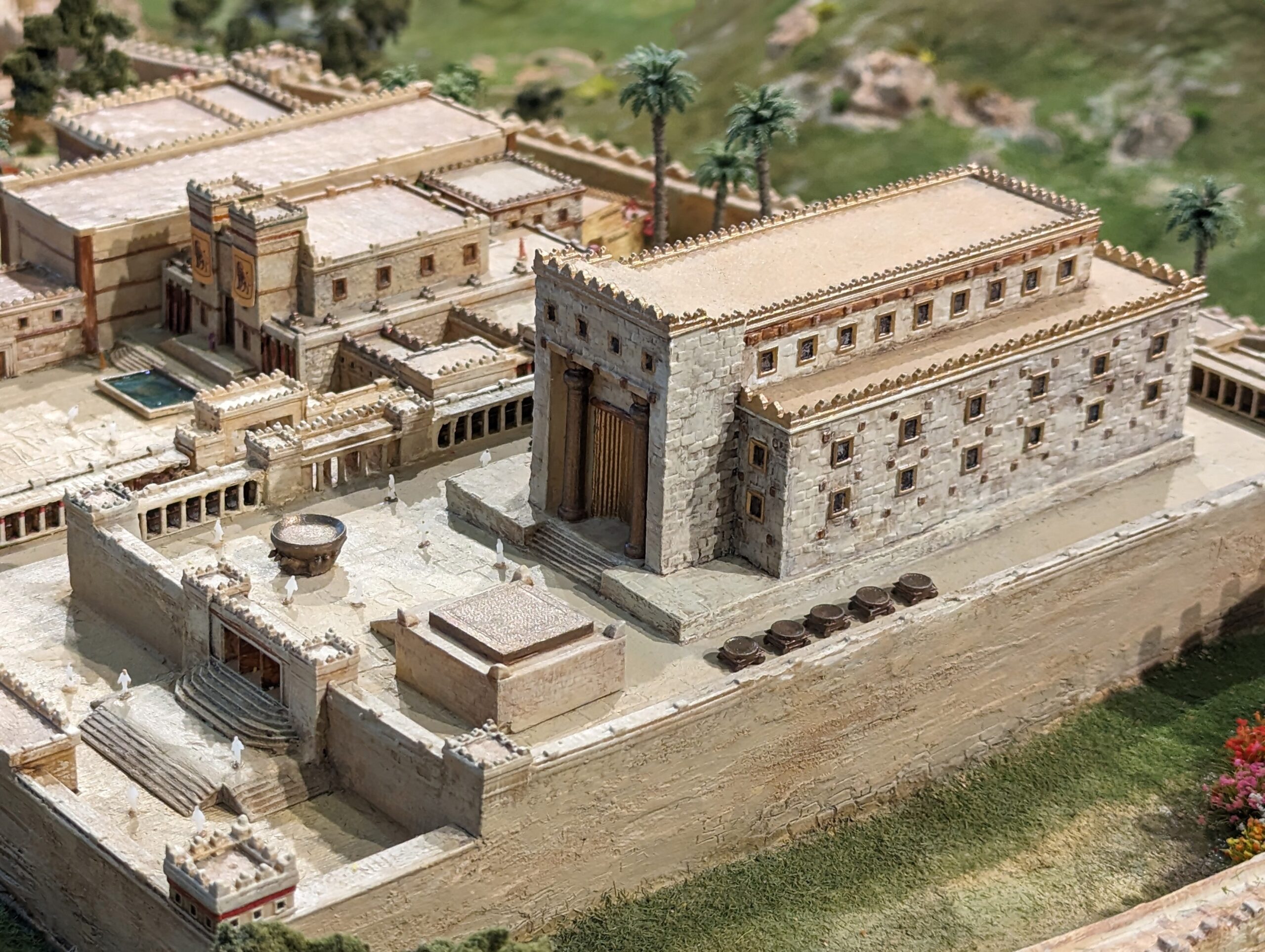
Look also at how much effort and expense David puts into preparing material for Solomon to use in building the temple, and the extensive planning he did for how it should be built.
1 Chronicles 22:14-16 (ESV)“With great pains I have provided for the house of the Lord 100,000 talents of gold, a million talents of silver, and bronze and iron beyond weighing, for there is so much of it; timber and stone, too, I have provided. To these you must add. You have an abundance of workmen: stonecutters, masons, carpenters, and all kinds of craftsmen without number, skilled in working gold, silver, bronze, and iron. Arise and work! The Lord be with you!”
1 Chronicles 28:11-13 (ESV)“Then David gave Solomon his son the plan of the vestibule of the temple, and of its houses, its treasuries, its upper rooms, and its inner chambers, and of the room for the mercy seat; and the plan of all that he had in mind for the courts of the house of the Lord, all the surrounding chambers, the treasuries of the house of God, and the treasuries for dedicated gifts; for the divisions of the priests and of the Levites, and all the work of the service in the house of the Lord; for all the vessels for the service in the house of the Lord…”
David was clearly excited about the building of the temple. He was so excited that, even knowing he would never see it himself, he devoted a great deal of his life to preparing his people so that they would be able to benefit from having it.
He was also so excited that he could not restrain himself from writing some of his psalms for the people who would one day be coming up the mountain to the temple. David’s Songs of Ascent speak to David’s faith: not only his faith that God would fulfill the promise to give success to David’s house, but also faith that people of the future would share David’s joy and love for the opportunity to come before God in worship.
The Bible highlights David many times for us as someone worth considering as an example, a “man after God’s own heart.” One of the lessons we can learn from David is to adopt his selfless attitude towards the worship of God. It is clear throughout his story that David loved God and that he loved the worship of God. What these Songs of Ascent show us is that this was not a self-centered love, where David wanted to show off to the world about how faithful he was, but instead it was a true love, one that extended even to making sacrifices so that people he would never meet could worship God in a way he would never be able to do himself.