In previous articles on Esther, I have focused mainly on the parallels we can make to the New Testament and to Christ. Today, I want to instead look at the lessons we can learn from Esther’s moral character and how she faced the trials that define her story.
If you want to boil it down to its most important parts, then Esther chapter four has to be the heart of the entire book. It marks the point where Esther needs to decide what kind of person she is going to be, and how she is going to respond to the situation and opportunities presented to her. We learn more about Esther’s moral character from this chapter than anywhere else in the book, and her decisions here determine the course of everything that follows.
The chapter begins with Esther’s cousin Mordecai hearing the news of a decree ordering the death of the Jewish people, and him sharing that news with Esther.
Esther 4:1, 5-7a (ESV) “When Mordecai learned all that had been done, Mordecai tore his clothes and put on sackcloth and ashes, and went out into the midst of the city, and he cried out with a loud and bitter cry. (…) Then Esther called for Hathach, one of the king’s eunuchs, who had been appointed to attend her, and ordered him to go to Mordecai to learn what this was and why it was. Hathach went out to Mordecai in the open square of the city in front of the king’s gate, and Mordecai told him all that had happened…”
Mordecai asks Esther to go before the king and plead with him for the life of their people. Esther, however, is concerned. Going before the king without invitation would be dangerous, even deadly.
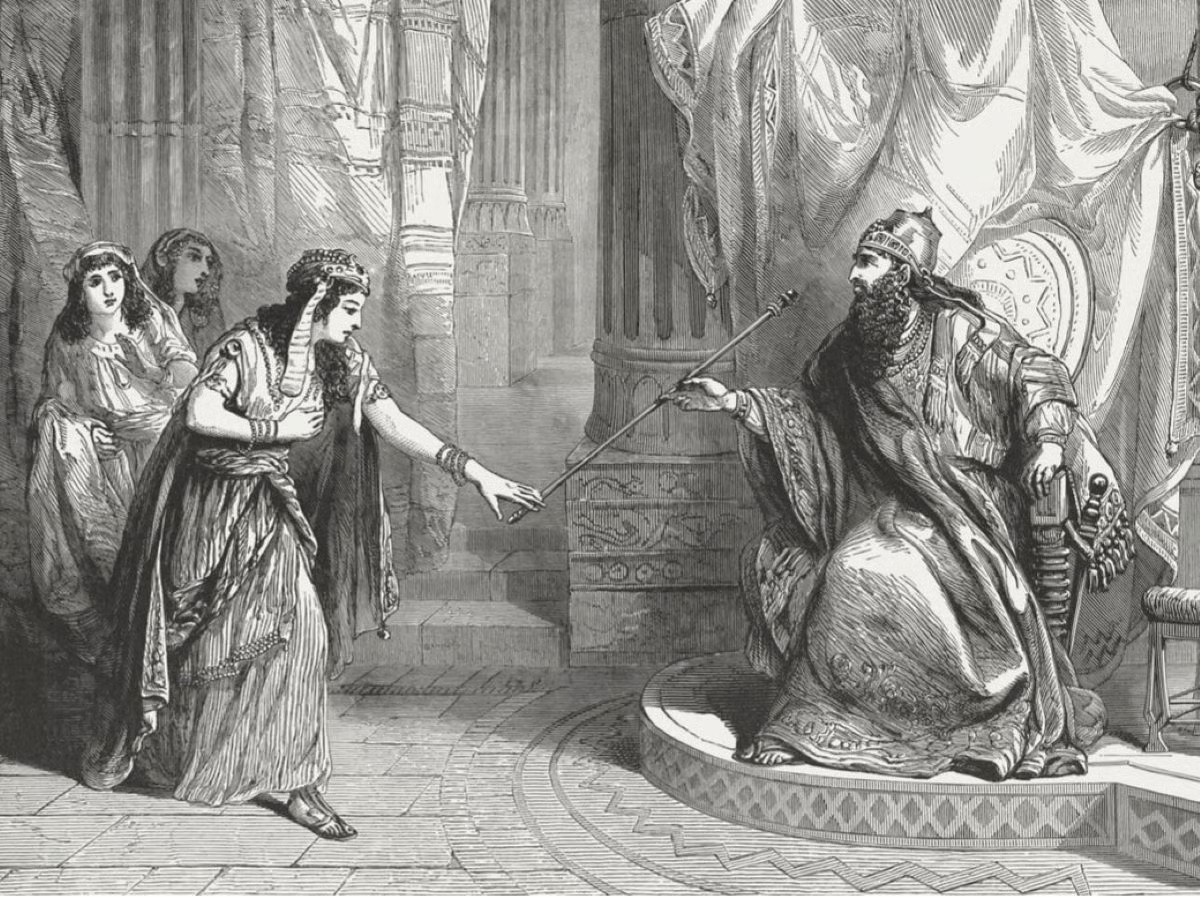
Esther 4:8, 10-11 (ESV) “Mordecai also gave him a copy of the written decree issued in Susa for their destruction, that he might show it to Esther and explain it to her and command her to go to the king to beg his favor and plead with him on behalf of her people. (…) Then Esther spoke to Hathach and commanded him to go to Mordecai and say, ‘All the king’s servants and the people of the king’s provinces know that if any man or woman goes to the king inside the inner court without being called, there is but one law—to be put to death, except the one to whom the king holds out the golden scepter so that he may live. But as for me, I have not been called to come in to the king these thirty days.’”
Hearing this, Mordecai gives his famous reply, telling her that this trial may be the reason for everything that has happened to her up to this moment.
Esther 4:13-14 (ESV)“Then Mordecai told them to reply to Esther, ‘Do not think to yourself that in the king’s palace you will escape any more than all the other Jews. For if you keep silent at this time, relief and deliverance will rise for the Jews from another place, but you and your father’s house will perish. And who knows whether you have not come to the kingdom for such a time as this?’”
Before we see her response, stop and consider Esther’s situation for a moment. For the last five years of her life, she has been living as a prisoner, completely isolated from her people. We saw in this passage that even talking to Mordecai, her closest family member, requires considerable effort. Being so isolated, Esther is utterly vulnerable to the whims of the king. If she does fail, there is nowhere she can escape to and no one who can help save her. Not only that, but Esther has no special message from God that tells her she has a guarantee of success, only Mordecai’s promise that God provides deliverance for his people.
So, how does Esther make her decision?
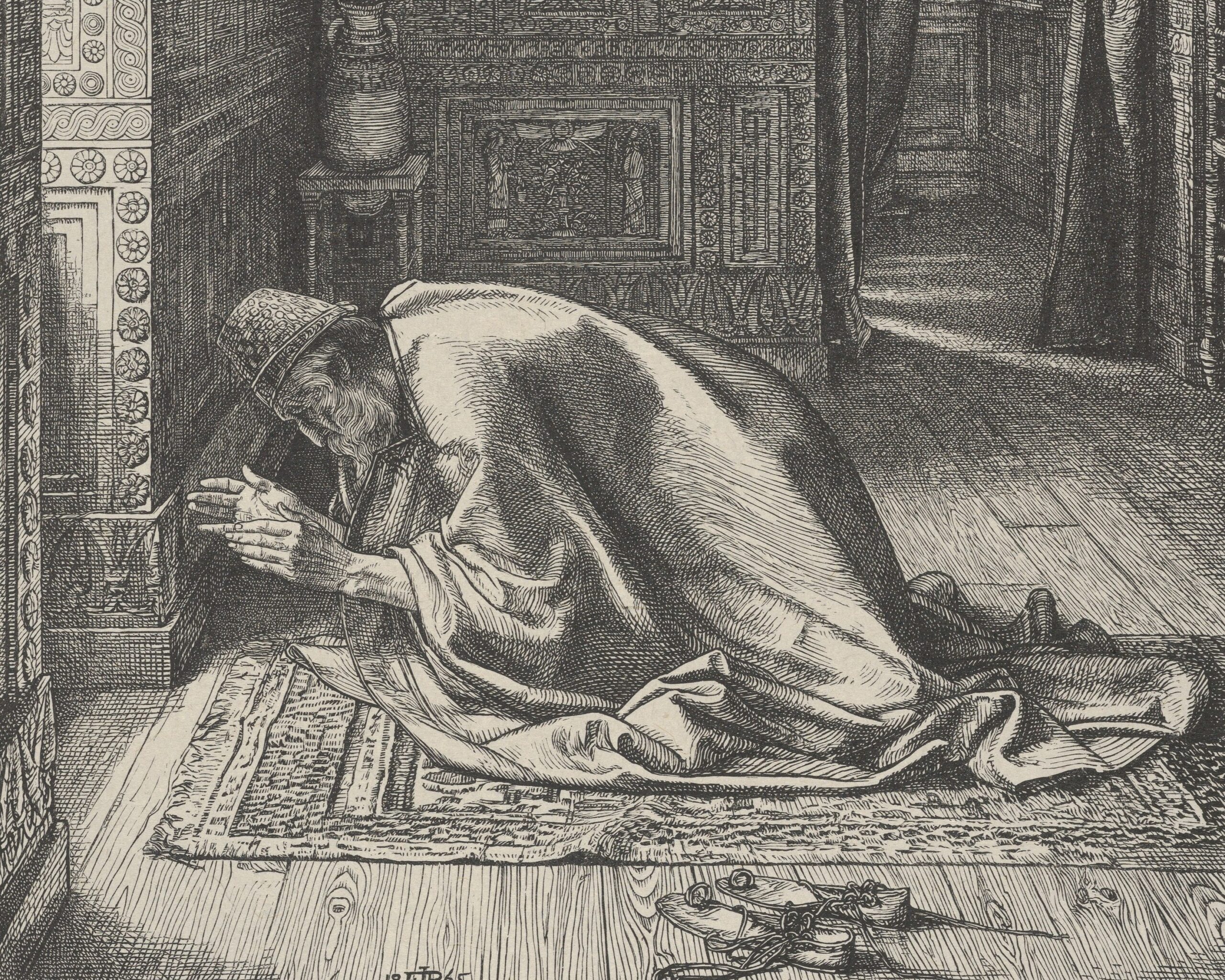
Esther 4:15-16 (ESV) “Then Esther told them to reply to Mordecai, ‘Go, gather all the Jews to be found in Susa, and hold a fast on my behalf, and do not eat or drink for three days, night or day. I and my young women will also fast as you do. Then I will go to the king, though it is against the law, and if I perish, I perish.’”
Esther does several important things in this moment. First, throughout this chapter we see that Esther desires the advice of someone she knew and trusted as spiritually mature. She listens to Mordecai not simply out of deference for their family relationship, but because she respects his guidance and wants to hear his words. Second, Esther trusted in the promises of God. She believes Mordecai’s wisdom that someone who does God’s will is going to find success, and decides that it is worthwhile to risk her life on that promise. Lastly, Esther seeks out the power of prayer, not just on her own, but by asking her brethren to fast and pray on her behalf.
One of the reasons I like Esther as an example for us is that we live in a time very similar to hers, and we face trials that, while hopefully less extreme than Esther’s, still require us to make similar decisions. Like Esther, we do not have personal messages from God telling us what to do in every moment or promising success if we take specific actions. We rely on the promises that are passed down in God’s law, just like she did, and we have to put ourselves forward on the faith that God will fulfill those promises for us.
Our methods for conquering our obstacles today are still the same as they were for Esther. We should seek out the advice of those we trust as spiritually mature, and lean on them for encouragement. We should trust in the promise that those who follow God and do his commandments will not be abandoned by him. And finally, we should devote ourselves continually to prayer, and bring our burdens to our brethren so that they can do the same on our behalf. If we do, then we can have confidence that God will help us, just as he has helped all of his followers throughout time.