You may already be familiar with the idea that Jesus Christ is the fulfillment of the three most important roles appointed by God in the Old Testament: he is the greatest prophet of God, the sovereign king of kings, and the eternal and perfect high priest.
Hebrews 1:1 (ESV) “Long ago, at many times and in many ways, God spoke to our fathers by the prophets, but in these last days he has spoken to us by his Son, whom he appointed the heir of all things, through whom also he created the world.”
1 Timothy 6:14-15 (ESV)“…to keep the commandment unstained and free from reproach until the appearing of our Lord Jesus Christ, which he will display at the proper time—he who is the blessed and only Sovereign, the King of kings and Lord of lords…”
Hebrews 7:28-8:2 (ESV)“For the law appoints men in their weakness as high priests, but the word of the oath, which came later than the law, appoints a Son who has been made perfect forever. Now the point in what we are saying is this: we have such a high priest, one who is seated at the right hand of the throne of the Majesty in heaven, a minister in the holy places, in the true tent that the Lord set up, not man.”
In the Old Testament, the men selected for these three roles were chosen by being anointed with oil. As the Messiah—literally the “anointed one”—Jesus has been anointed to fill the spiritual forms of these positions in the kingdom of heaven. As prophet, he brings us the perfected word of God; as king, he holds authority as the head of the church; and as high priest, he now intercedes before God on our behalf. God anointed men to these positions in the Old Testament in part to show us what Christ would do in the New Testament.
Leviticus 21:10 (ESV)“The priest who is chief among his brothers, on whose head the anointing oil is poured and who has been consecrated to wear the garments, shall not let the hair of his head hang loose nor tear his clothes.”
1 Samuel 16:1, 2b (ESV)“The Lord said to Samuel, ‘How long will you grieve over Saul, since I have rejected him from being king over Israel? Fill your horn with oil, and go. I will send you to Jesse the Bethlehemite, for I have provided for myself a king among his sons. (…) And you shall anoint for me him whom I declare to you.’”
1 Kings 19:16b (ESV)“…and Elisha the son of Shaphat of Abel-meholah you shall anoint to be prophet in your place.”
Acts 10:37-38 (ESV) “…you yourselves know what happened throughout all Judea, beginning from Galilee after the baptism that John proclaimed: how God anointed Jesus of Nazareth with the Holy Spirit and with power. He went about doing good and healing all who were oppressed by the devil, for God was with him.”
We often point to several important people in the Old Testament who foreshadow Christ in these roles, people like Moses, David, and Melchizedek. These were great men whose righteousness shows us what Jesus now does for us in an even greater measure. However, what I want to discuss today is that while we have these examples of what good prophets, kings, and priests are supposed to look like, the Old Testament also gives us examples of what it is to have an evil prophet, king, or priest. These bad examples can be just as instructive to us as the good ones, showing us how fortunate we are to have Christ in our lives today.
An Unrighteous Prophet
Early on in the history of Israel, during their final days of traveling to Canaan, the people came up against the nation of Moab, who greatly feared the Israelites. In response to Israel’s arrival, the Moab king decided to ask a prophet of God named Balaam to come and curse Israel so that they would be destroyed.
Numbers 22:1-6 (ESV) “Then the people of Israel set out and camped in the plains of Moab beyond the Jordan at Jericho. And Balak the son of Zippor saw all that Israel had done to the Amorites. And Moab was in great dread of the people, because they were many. Moab was overcome with fear of the people of Israel. And Moab said to the elders of Midian, ‘This horde will now lick up all that is around us, as the ox licks up the grass of the field.’ So Balak the son of Zippor, who was king of Moab at that time, sent messengers to Balaam the son of Beor at Pethor, which is near the River in the land of the people of Amaw, to call him, saying, ‘Behold, a people has come out of Egypt. They cover the face of the earth, and they are dwelling opposite me. Come now, curse this people for me, since they are too mighty for me. Perhaps I shall be able to defeat them and drive them from the land, for I know that he whom you bless is blessed, and he whom you curse is cursed.’”
Unlike many false prophets in the Old Testament, Balaam was a true prophet of God, and across the next two chapters, we see that Balaam is physically incapable of cursing God’s people, instead blessing them four times. After this, in Numbers 25, the Moabites instead take a different strategy, tempting the people of Israel into sexual immorality, causing great destruction. If this were the only time that we read about Balaam, we might think that while he probably made a bad decision coming to see the king of Moab, he ended up not doing any real harm. However, later on, we learn a few new facts about this story.
Numbers 31:16 (ESV) “Behold, these, on Balaam’s advice, caused the people of Israel to act treacherously against the Lord in the incident of Peor, and so the plague came among the congregation of the Lord.”
2 Peter 2:15 (ESV)“Forsaking the right way, they have gone astray. They have followed the way of Balaam, the son of Beor, who loved gain from wrongdoing…”
Revelation 2:14 (ESV)“But I have a few things against you: you have some there who hold the teaching of Balaam, who taught Balak to put a stumbling block before the sons of Israel, so that they might eat food sacrificed to idols and practice sexual immorality.”
After Balaam finished blessing Israel, he then instructed the Moabites on how to lead Israel into sin, an act that resulted in the death of more than twenty-four thousand people. All of this he did for the sake worldly gain. When the Israelites finally defeat the Moabites in Numbers 31, they find Balaam there among them and put him to death for his evil deeds.
What we see in Baalam is the worst kind of prophet: one who receives the true oracles of God, but instead devotes himself to teaching sin and destruction to the people he is supposed to guide.
An Evil King
The Old Testament has its fair share of bad kings to choose from, but one of the worst was King Manasseh of Judah.
2 Kings 21:1-6 (ESV)“Manasseh was twelve years old when he began to reign, and he reigned fifty-five years in Jerusalem. His mother’s name was Hephzibah. And he did what was evil in the sight of the Lord, according to the despicable practices of the nations whom the Lord drove out before the people of Israel. For he rebuilt the high places that Hezekiah his father had destroyed, and he erected altars for Baal and made an Asherah, as Ahab king of Israel had done, and worshiped all the host of heaven and served them. And he built altars in the house of the Lord, of which the Lord had said, ‘In Jerusalem will I put my name.’ And he built altars for all the host of heaven in the two courts of the house of the Lord. And he burned his son as an offering and used fortune-telling and omens and dealt with mediums and with necromancers. He did much evil in the sight of the Lord, provoking him to anger.”
2 Kings 21:9 (ESV) “But they did not listen, and Manasseh led them astray to do more evil than the nations had done whom the Lord destroyed before the people of Israel.”
2 Kings 21:16 (ESV) “Moreover, Manasseh shed very much innocent blood, till he had filled Jerusalem from one end to another, besides the sin that he made Judah to sin so that they did what was evil in the sight of the Lord.”
Not only did Manasseh do many evil things himself, but he even destroyed many of the good works of his father Hezekiah, who was very faithful to God and one of the greatest kings of Judah. Manasseh led the people into tremendous sin that was even worse than the sin of the Canaanites, who God had once destroyed in his wrath. Manasseh’s unrighteous leadership caused great spiritual harm to the congregation of Israel and his leadership led his people to become removed from God.
Manasseh represents the worst kind of king: one who is given a great responsibility to lead God’s people in doing righteous works, but who instead only leads them into committing sin.
A Sinful High Priest
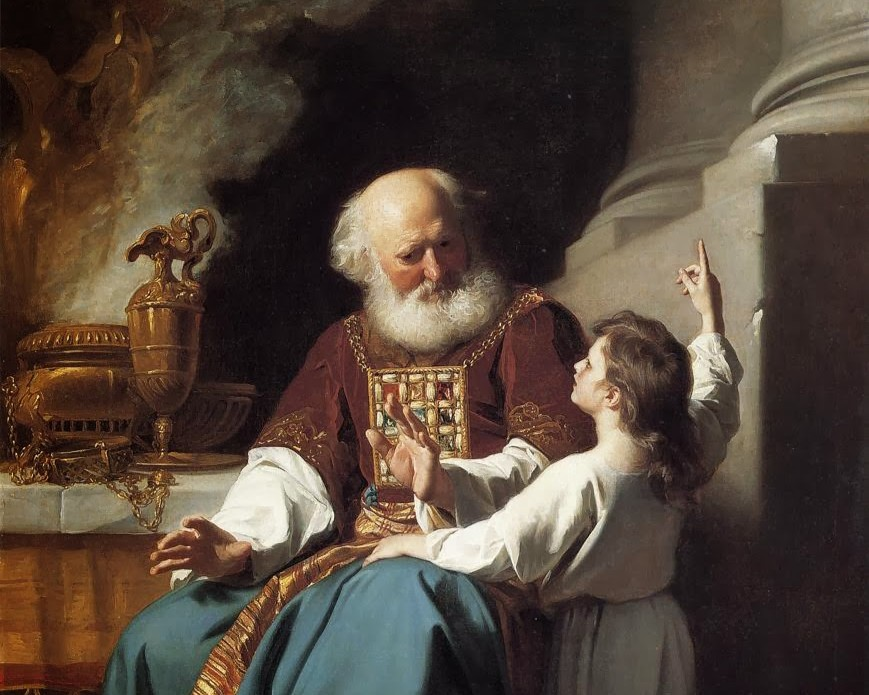
Again, we have many options to choose from when it comes to finding bad high priests. Even Aaron, the very first high priest of Israel, sinned by making the golden calf while Moses was on Mount Sinai. However, the person I want to look at for our example today is the man who was the high priest during the time of 1 Samuel, Eli.
1 Samuel 2:12-14, 2:17 (ESV) “Now the sons of Eli were worthless men. They did not know the Lord. The custom of the priests with the people was that when any man offered sacrifice, the priest’s servant would come, while the meat was boiling, with a three-pronged fork in his hand, and he would thrust it into the pan or kettle or cauldron or pot. All that the fork brought up the priest would take for himself. This is what they did at Shiloh to all the Israelites who came there. (…) Thus the sin of the young men was very great in the sight of the Lord, for the men treated the offering of the Lord with contempt.”
1 Samuel 2:22 (ESV) “Now Eli was very old, and he kept hearing all that his sons were doing to all Israel, and how they lay with the women who were serving at the entrance to the tent of meeting.”
While Eli himself seems to have been an adequate priest in his own duties, his great failure was in his lack of leadership over his sons. The people who were supposed to be responsible for interceding with God on behalf of the people were instead immersing themselves in sin and worldly pleasures. As high priest, Eli was supposed to be teaching and leading his sons to act righteously in their duties. Further on in 1 Samuel, we see that God was exceedingly displeased with Eli and his household, and he sends a message of judgment to Eli, laying the responsibility for this sin at his feet.
1 Samuel 2:27-31 (ESV) “And there came a man of God to Eli and said to him, ‘Thus says the Lord, ‘Did I indeed reveal myself to the house of your father when they were in Egypt subject to the house of Pharaoh? Did I choose him out of all the tribes of Israel to be my priest, to go up to my altar, to burn incense, to wear an ephod before me? I gave to the house of your father all my offerings by fire from the people of Israel. Why then do you scorn my sacrifices and my offerings that I commanded for my dwelling, and honor your sons above me by fattening yourselves on the choicest parts of every offering of my people Israel?’ Therefore the Lord, the God of Israel, declares: ‘I promised that your house and the house of your father should go in and out before me forever,’ but now the Lord declares: ‘Far be it from me, for those who honor me I will honor, and those who despise me shall be lightly esteemed. Behold, the days are coming when I will cut off your strength and the strength of your father’s house, so that there will not be an old man in your house.’’”
1 Samuel 3:12-13 (ESV) “On that day I will fulfill against Eli all that I have spoken concerning his house, from beginning to end. And I declare to him that I am about to punish his house forever, for the iniquity that he knew, because his sons were blaspheming God, and he did not restrain them.”
As the high priest, Eli held authority over all the sacrifices and worship of God’s people, and yet by refusing to exercise leadership over that worship, he allowed those sacrifices to become tainted by sinful priests. Because of that, God condemned him and his whole household to destruction.
Eli shows us what it means to be a failed high priest: someone who was granted oversight over the worship of God, but who neglected that worship and treated it as commonplace.
The Great Prophet, Eternal Priest, and King of Kings
In the Old Testament, God’s people had to suffer immensely under these imperfect and failed leaders. Even when someone good came along, it was only a matter of time before they died and someone else took their place, who might completely undo what good had been made before. This was one of the great weaknesses of the Law of Moses, that all of these critical roles had to be filled by fallible human beings. Fortunately for us, our covenant today does not have these same problems.
Unlike Balaam, Jesus not only loves the word of God, John 1:1 tells us that Jesus himself is the word of God. Jesus devoted his life on earth to teaching us God’s commandments, and when he rose from the dead he passed that duty on to his apostles through the Holy Spirit. Today, we continue to labor under Christ in this work, by faithfully bringing Jesus’ message to the world.
Unlike Manasseh, Jesus leads us not into sinful living, but to live a life of good works, just as he himself lived. Jesus rules over us with love, guiding us to walk righteously. By following Jesus faithfully, we ourselves are glorified and lifted up to reign with him.
Unlike Eli, Jesus is a high priest who is perfect and without sin. He is a watchful leader over us, and he has taught us how to serve as sanctified priests in service beneath him. When we stumble, Jesus is able to stand before God and offer intercession for our sins, because he himself was the perfect sacrifice offered on our behalf.
Each of these examples of failure should only remind us even more how blessed we are to have Christ, the great prophet who brings us the law of liberty, the king of kings who leads us in righteousness, and the eternal high priest who is completely without sin. As we labor underneath Christ in each of these works, we are able to look to him as a perfect and dependable example of all things.