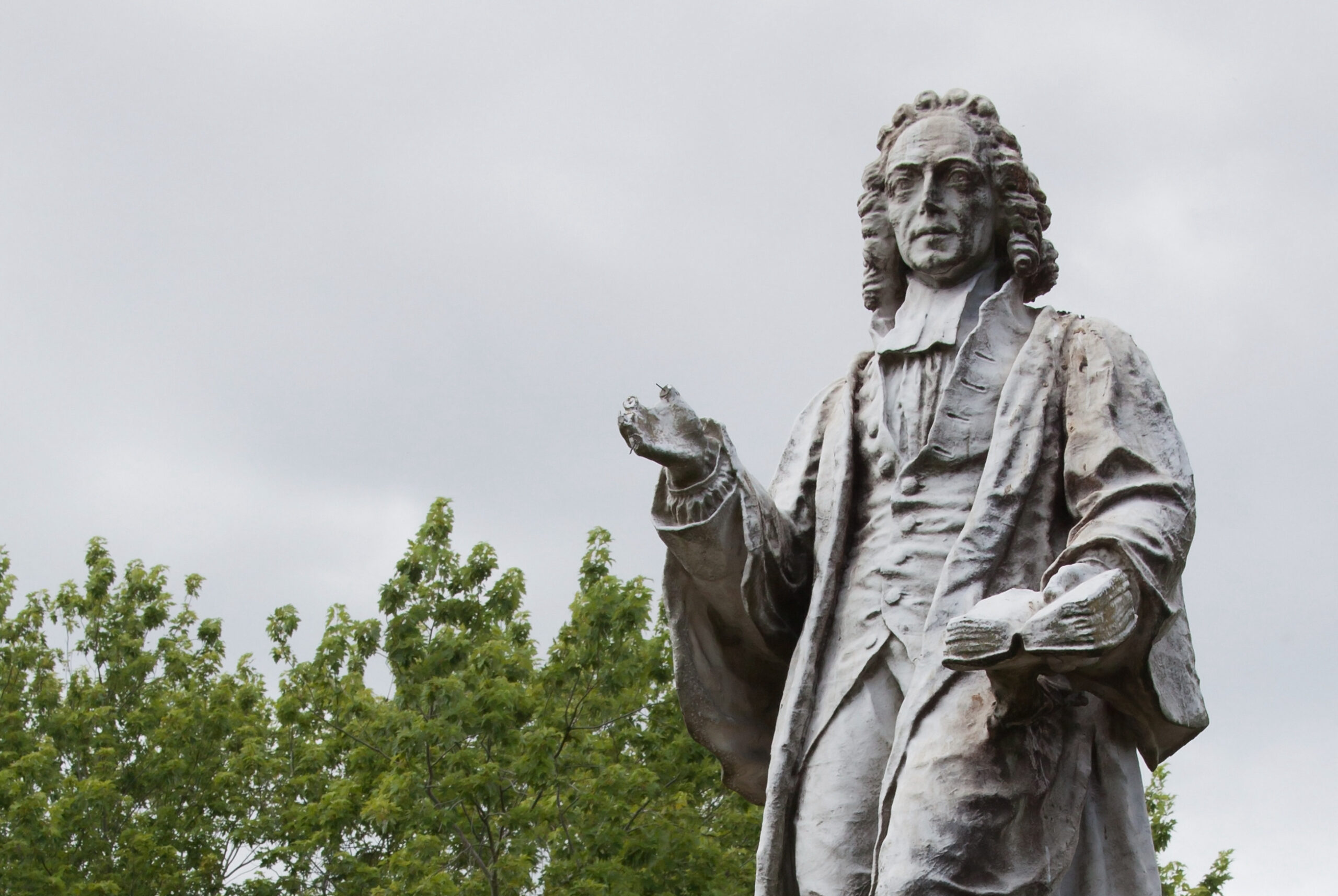
The pages of our hymnals are filled with the names of famous and prolific writers, both new and old. Isaac Watts, Charles Wesley, Fanny Crosby, Virgil Stamps, and Keith and Kristyn Getty are only a few of the people who have helped to define our tradition of singing over the last five hundred years. However, all of these names are also of people who I would generally not consider to be brethren in Christ, or at least I would have strong disagreements concerning their theological beliefs. Some of them were very active false teachers who caused great harm to the church in their lives. Indeed, the number of songs that we sing today written by genuine members of the Lord’s church probably comes out to a minority group in most of our books.
So, if all of these people are so problematic, why do we still allow their songs to be included and used in our worship? Should we be tearing pages out of our books to make sure that we are only using material made by those we have fellowship with? While I have seen churches occasionally ban one or two songs on the basis of their content or author, widely applying any reasonable rubric to the personal quality of hymn writers would result in us having to mark out half or more of our repertoire.
There is a lot that we could dance around with this topic, and many sound logical arguments that you could make as to why we should or should not sing these songs. Many people have already done so. However, I find that the best thing to do for questions like this is to turn to the Bible and try to find places that parallel the situation that we are seeking to understand today.
Gentile-Funded Worship
The first place I want to consider goes back to the time of Zerubbabel in the book of Ezra, when the Jews in Jerusalem were rebuilding the temple of God. At that time, a letter had been sent to the king of Persia accusing the Jews of rebellion against the king because of their labor. The king’s reply is recorded in Ezra 6:
Ezra 6:2-10 (ESV) “And in Ecbatana, the citadel that is in the province of Media, a scroll was found on which this was written: ‘A record. In the first year of Cyrus the king, Cyrus the king issued a decree: Concerning the house of God at Jerusalem, let the house be rebuilt, the place where sacrifices were offered, and let its foundations be retained. Its height shall be sixty cubits and its breadth sixty cubits, with three layers of great stones and one layer of timber. Let the cost be paid from the royal treasury. And also let the gold and silver vessels of the house of God, which Nebuchadnezzar took out of the temple that is in Jerusalem and brought to Babylon, be restored and brought back to the temple that is in Jerusalem, each to its place. You shall put them in the house of God.’
‘Now therefore, Tattenai, governor of the province Beyond the River, Shethar-bozenai, and your associates the governors who are in the province Beyond the River, keep away. Let the work on this house of God alone. Let the governor of the Jews and the elders of the Jews rebuild this house of God on its site. Moreover, I make a decree regarding what you shall do for these elders of the Jews for the rebuilding of this house of God. The cost is to be paid to these men in full and without delay from the royal revenue, the tribute of the province from Beyond the River. And whatever is needed—bulls, rams, or sheep for burnt offerings to the God of heaven, wheat, salt, wine, or oil, as the priests at Jerusalem require—let that be given to them day by day without fail, that they may offer pleasing sacrifices to the God of heaven and pray for the life of the king and his sons.’”
The kings of Persia were not people who you would call exceptionally faithful to God. Although they sometimes showed an appreciation for the God of the Israelites, we know that they still worshiped idols and behaved sinfully like all the kings of the nations around them. Even if they had been perfect people, we know that as Gentiles they were not allowed to participate in the covenant God had with the Israelites.
Despite this, we see here in the book of Ezra that God found it acceptable to allow the Persians to provide the material for both the building of the temple and the worship done within it. This is a continuation of a pattern that we see repeated throughout the Old Testament. In Exodus, the materials for the tabernacle were provided from the goods the Egyptians gave the Israelites as they fled Egypt. Later, when Solomon goes to build the temple, both materials and workers are provided freely by the king of Tyre and Sidon.
All of these are examples of God’s people accepting material aid from outsiders in order to facilitate their own worship. These Gentile nations did not join the Israelites because of this support, nor did they gain any standing to participate in worship by the merit of these actions. However, because their contributions were convenient and expedient to accomplish God’s purposes, they were accepted and put to good use by God’s people.
Pharisees In Moses’ Seat
The second example I believe is relevant to this question is in the New Testament, when Jesus is teaching his disciples in Matthew 23, telling them how they ought to view the Pharisees.
Matthew 23:1-7 (ESV) “Then Jesus said to the crowds and to his disciples, ‘The scribes and the Pharisees sit on Moses’ seat, so do and observe whatever they tell you, but not the works they do. For they preach, but do not practice. They tie up heavy burdens, hard to bear, and lay them on people’s shoulders, but they themselves are not willing to move them with their finger. They do all their deeds to be seen by others. For they make their phylacteries broad and their fringes long, and they love the place of honor at feasts and the best seats in the synagogues and greetings in the marketplaces and being called rabbi by others.’”
Similar to the Gentile nations in the Old Testament, we know that the Pharisees were generally not considered to be very pleasing to God. The entirety of Matthew 23 is Jesus condemning the Pharisees as unrighteous hypocrites. However, in the midst of this condemnation, Jesus reminds his disciples that even the Pharisees should be listened to when they were speaking something that comes from the word of God.
From this, we understand that what is truly important is not who it is that brings a message, but what it is the message says. This goes both directions: just because a person seems to be good and faithful does not mean we should accept everything they say, and just because a person has obvious problems does not mean we should disregard their words out of hand. We must be discerning to know when someone is speaking the truth by comparing it with our understanding of what God has already told us.
Singing With Understanding
Both of these situations are similar to the one we are dealing with in our hymnals. We are considering the prospect of using materials written by unfaithful people in our worship to God, material that may possibly contain either the truth of God’s word or dangerous false teachings. The writers who wrote the songs that we sing, while they themselves were not faithful to the truth, still wrote many of their songs with a basis in Scripture. Even if they may have taught doctrinal error in one area, most still had a true understanding in others that we can appreciate in our singing.
The important thing for us is to take the time to review these songs and to have the maturity to ensure that their content is both accurate to God’s word and fruitful for our worship. If we can confirm that they are speaking God’s truth, like the Pharisees speaking from the seat of Moses, and if we find them to be a useful tool for our worship, like the sacrifices donated by the Persians, then there is no reason that we should hesitate to use these songs to glorify God.