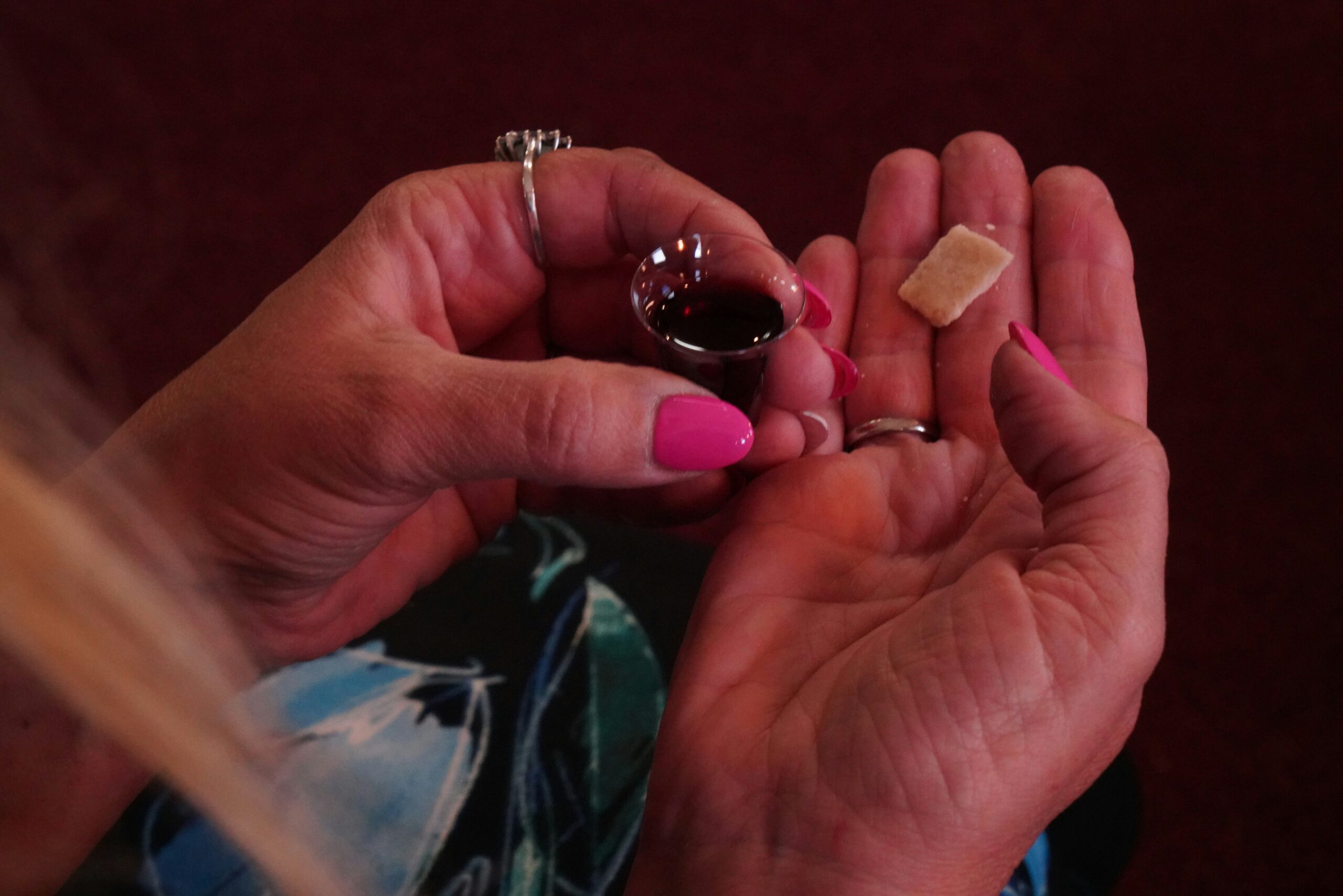
In 1 Corinthians 11, Paul gives us a summary of what it means to partake of the Lord’s Supper.
1 Corinthians 11:23-26 (ESV) “For I received from the Lord what I also delivered to you, that the Lord Jesus on the night when he was betrayed took bread, and when he had given thanks, he broke it, and said, ‘This is my body, which is for you. Do this in remembrance of me.’ In the same way also he took the cup, after supper, saying, ‘This cup is the new covenant in my blood. Do this, as often as you drink it, in remembrance of me.’ For as often as you eat this bread and drink the cup, you proclaim the Lord’s death until he comes.”
That last statement, that by taking communion we are proclaiming the Lord’s death, is an interesting one, especially since it seems to be a core part of what the Lord’s Supper is supposed to be. What does it mean to proclaim Jesus’ death? To understand this, I think it will help to remind ourselves of a few important details about the essential nature of the Lord’s Supper.
First of all, we know that it matters who we are taking the Lord’s Supper with. This was the key problem of the Corinthians that caused Paul to write to them about this, because they were not waiting for one another. The Lord’s Supper is something that is designed to be done together by a congregation of believers. Paul goes on in the rest of 1 Corinthians 11 to highlight the importance of examining yourself, both to make sure that you are qualified to partake of it, and to know that you are among people who are doing the same.
Second, the Lord’s Supper is something that is done every time we gather together on the first day of the week. For two thousand years, from when the church was first founded in the book of Acts, all the way to today, Christians around the world have gathered every week to partake of communion together. In a profound way, our worship that we offer each Sunday is a continuation of that ongoing sacrifice that the universal church has been bringing before God since the day of its creation.
Lastly, we know that the Lord’s Supper is not just a memorial of Christ’s death, but an expectation of his return. The reason we remind ourselves of Jesus’ death and resurrection is because his resurrection is the promise of our own eternal salvation. When each of us were baptized to become Christians, we were baptized into Christ’s death and raised up into a new life with him. Each time we take the bread and cup, we are being encouraged to remember Jesus’ promise of his return.
So, putting all these things together, we can see just how important this idea of making a proclamation is. When we partake of the Lord’s Supper together, we are testifying that we believe that Jesus will return again, that we have placed ourselves among the family of those who believe likewise, and that we are every week renewing our commitment to Christ until he returns on the last day. When we partake, we make this proclamation not just to each other, but to everyone in the world who sees us performing our constant service to God.