In the last article, we considered how Mordecai’s salvation from death on the gallows parallels Christ’s resurrection from death on the cross, and how both were saved to receive great honor and glory. When we left off, we saw the evil man Haman be executed by the king of Persia for his attempt to kill Mordecai, Esther, and all their people.
In many cases, for the sake of time or simplicity, this is where one might to choose to end a study of the book of Esther. Haman is defeated, the king has given Esther and Mordecai free reign to save their people, and it seems like all that is left is to tidy up the details. Skipping over the rest of the book, however, leaves behind several important lessons that are still left to learn.
An Edict of Salvation
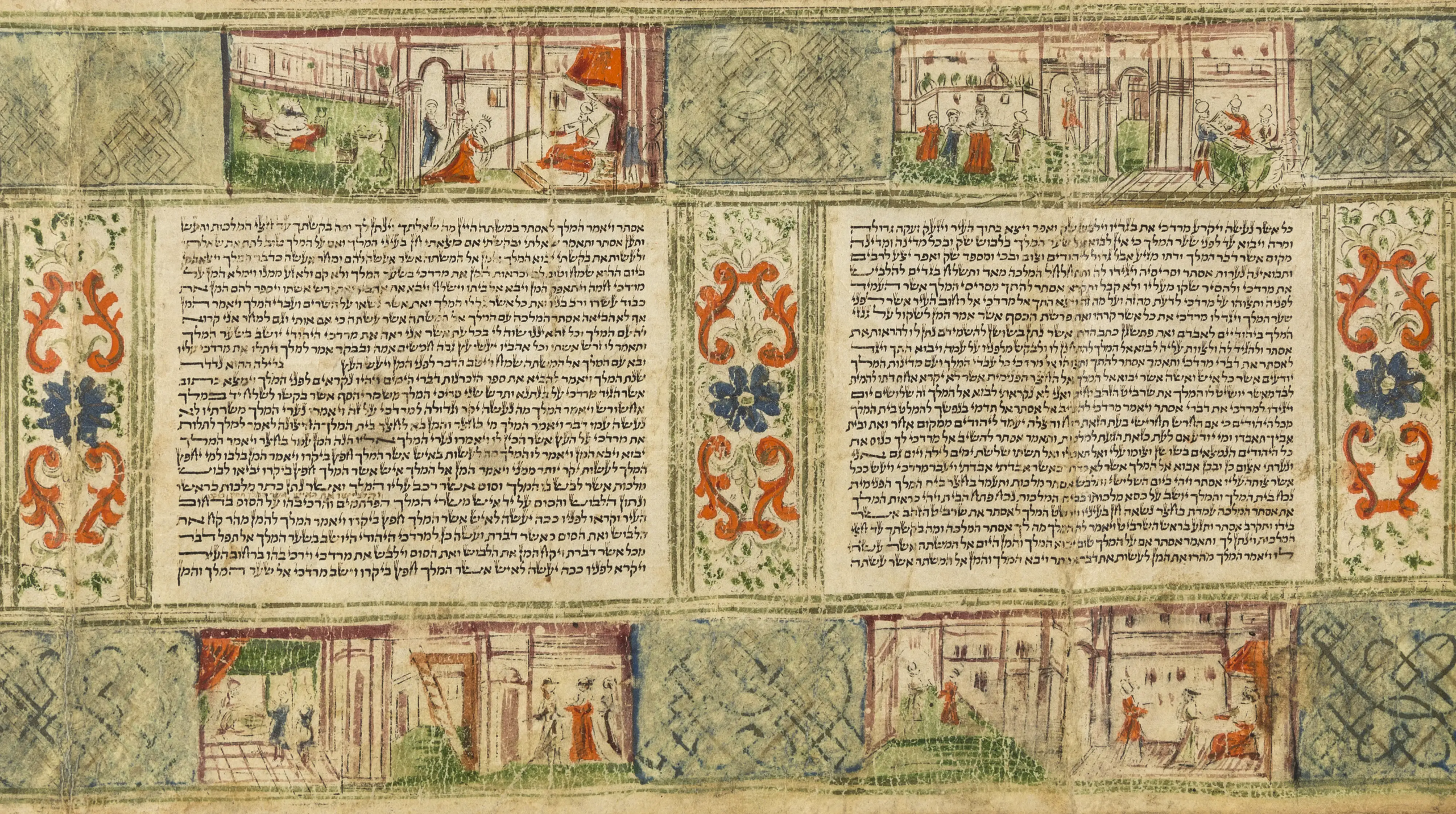
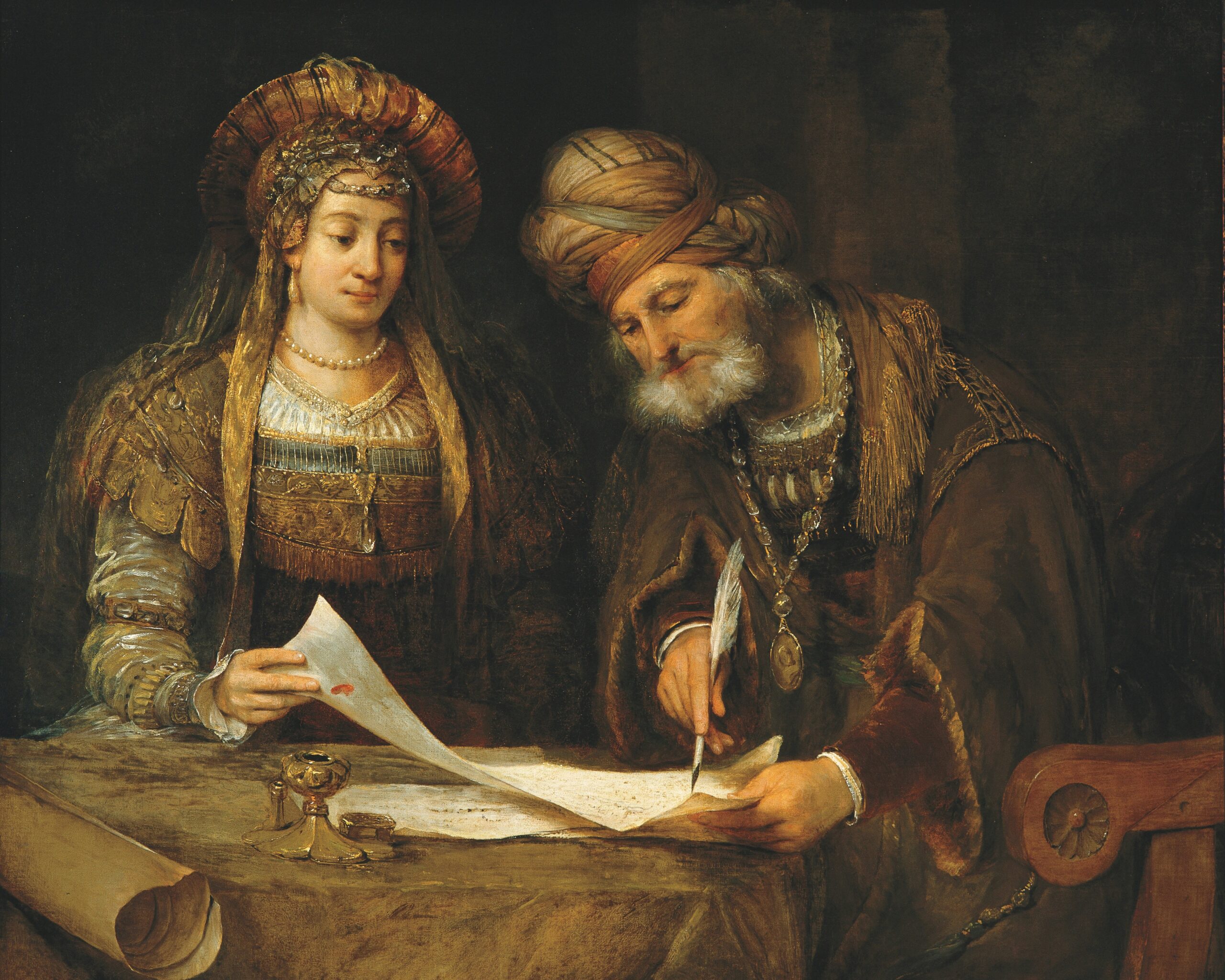
In Esther chapter eight, it is revealed that an edict sealed in the name of the king, like the one Haman issued to kill all the Jews in Persia, cannot be revoked. Esther pleads with the king, but the only thing the king can do is give Esther and Mordecai the authority to write something new. So, they summon the king’s scribes and put together a new royal edict commanding that the Jews be allowed to defend themselves against the men who will carry out Haman’s orders.
Esther 8:7-8 (ESV) “Then King Ahasuerus said to Queen Esther and to Mordecai the Jew, ‘Behold, I have given Esther the house of Haman, and they have hanged him on the gallows, because he intended to lay hands on the Jews. But you may write as you please with regard to the Jews, in the name of the king, and seal it with the king’s ring, for an edict written in the name of the king and sealed with the king’s ring cannot be revoked.’”
In the New Testament, we can see a strong parallel in the situation that Christ comes to resolve. By the time of Jesus, the Law of Moses was a broken covenant. The Israelites had turned against it countless times, and God had finally done what he had promised he would do when he made the covenant: the Israelites lost possession of the promised land and lived as subjects of a foreign people. Even then, much like the king’s edict in Esther, the Law could not simply be annulled once it was created. The people of Israel were still bound by the Law of Moses, even after they had lost the promises associated with it.
Daniel 9:11-12 (ESV) “All Israel has transgressed your law and turned aside, refusing to obey your voice. And the curse and oath that are written in the Law of Moses the servant of God have been poured out upon us, because we have sinned against him. He has confirmed his words, which he spoke against us and against our rulers who ruled us, by bringing upon us a great calamity. For under the whole heaven there has not been done anything like what has been done against Jerusalem.”
Galatians 3:15 (ESV) “To give a human example, brothers: even with a man-made covenant, no one annuls it or adds to it once it has been ratified.”
To truly resolve the problems of the people, something entirely new was required. When Christ arose from the grave, crowned in glory and given all authority, he brought with him a new covenant not just for Israel, but for all the earth.
Hebrews 8:6-8, 13 (ESV) “But as it is, Christ has obtained a ministry that is as much more excellent than the old as the covenant he mediates is better, since it is enacted on better promises. For if that first covenant had been faultless, there would have been no occasion to look for a second. For he finds fault with them when he says: ‘Behold, the days are coming, declares the Lord, when I will establish a new covenant with the house of Israel and with the house of Judah,’ (…) In speaking of a new covenant, he makes the first one obsolete. And what is becoming obsolete and growing old is ready to vanish away.”
Hebrews 9:15-16, 22-24 (ESV) “Therefore he is the mediator of a new covenant, so that those who are called may receive the promised eternal inheritance, since a death has occurred that redeems them from the transgressions committed under the first covenant. For where a will is involved, the death of the one who made it must be established. (…) Indeed, under the law almost everything is purified with blood, and without the shedding of blood there is no forgiveness of sins. Thus it was necessary for the copies of the heavenly things to be purified with these rites, but the heavenly things themselves with better sacrifices than these. For Christ has entered, not into holy places made with hands, which are copies of the true things, but into heaven itself, now to appear in the presence of God on our behalf.”
Galatians 3:23-26 (ESV)“Now before faith came, we were held captive under the law, imprisoned until the coming faith would be revealed. So then, the law was our guardian until Christ came, in order that we might be justified by faith. But now that faith has come, we are no longer under a guardian, for in Christ Jesus you are all sons of God, through faith.”
Much like Mordecai’s edict, which saved his people from an edict that brought only death, this new covenant is a law of liberty that brings freedom from the old law of sin and death. It is the fulfillment of the old law, and as such it is also able to bring the old law to an end, so that it may now be replaced with something even greater.
At the end of Esther chapter eight, Mordecai brings his people the new edict, dressed again in the royal robes, and the Jews are filled with joy and gladness for the salvation that he has brought them. As the news of the edict spreads, many of the people in the nation even pretend to be Jews out of fear.
Esther 8:15-17 (ESV) “Then Mordecai went out from the presence of the king in royal robes of blue and white, with a great golden crown and a robe of fine linen and purple, and the city of Susa shouted and rejoiced. The Jews had light and gladness and joy and honor. And in every province and in every city, wherever the king’s command and his edict reached, there was gladness and joy among the Jews, a feast and a holiday. And many from the peoples of the country declared themselves Jews, for fear of the Jews had fallen on them.”
In the New Testament, we too receive our edict of salvation with joy and gladness, and it is not just the Jews but all people who are invited to truly participate in the new covenant, not out of fear but because of love of God that has been shown to us.
1 Peter 1:8-9 (ESV) “Though you have not seen him, you love him. Though you do not now see him, you believe in him and rejoice with joy that is inexpressible and filled with glory, obtaining the outcome of your faith, the salvation of your souls.”
Ephesians 3:4-6 (ESV) “When you read this, you can perceive my insight into the mystery of Christ, which was not made known to the sons of men in other generations as it has now been revealed to his holy apostles and prophets by the Spirit. This mystery is that the Gentiles are fellow heirs, members of the same body, and partakers of the promise in Christ Jesus through the gospel.”
In the book of Esther, Mordecai brought a message of physical salvation from their enemies to his people. Now, today, Christ has brought for all the world a covenant of true salvation that leads to eternal life, and we are the ones are filled with light and gladness and joy and honor for the great gift that we have received. It is because of this love that God has showed to us that we now return that love to God, by offering him our faithful service in his kingdom.