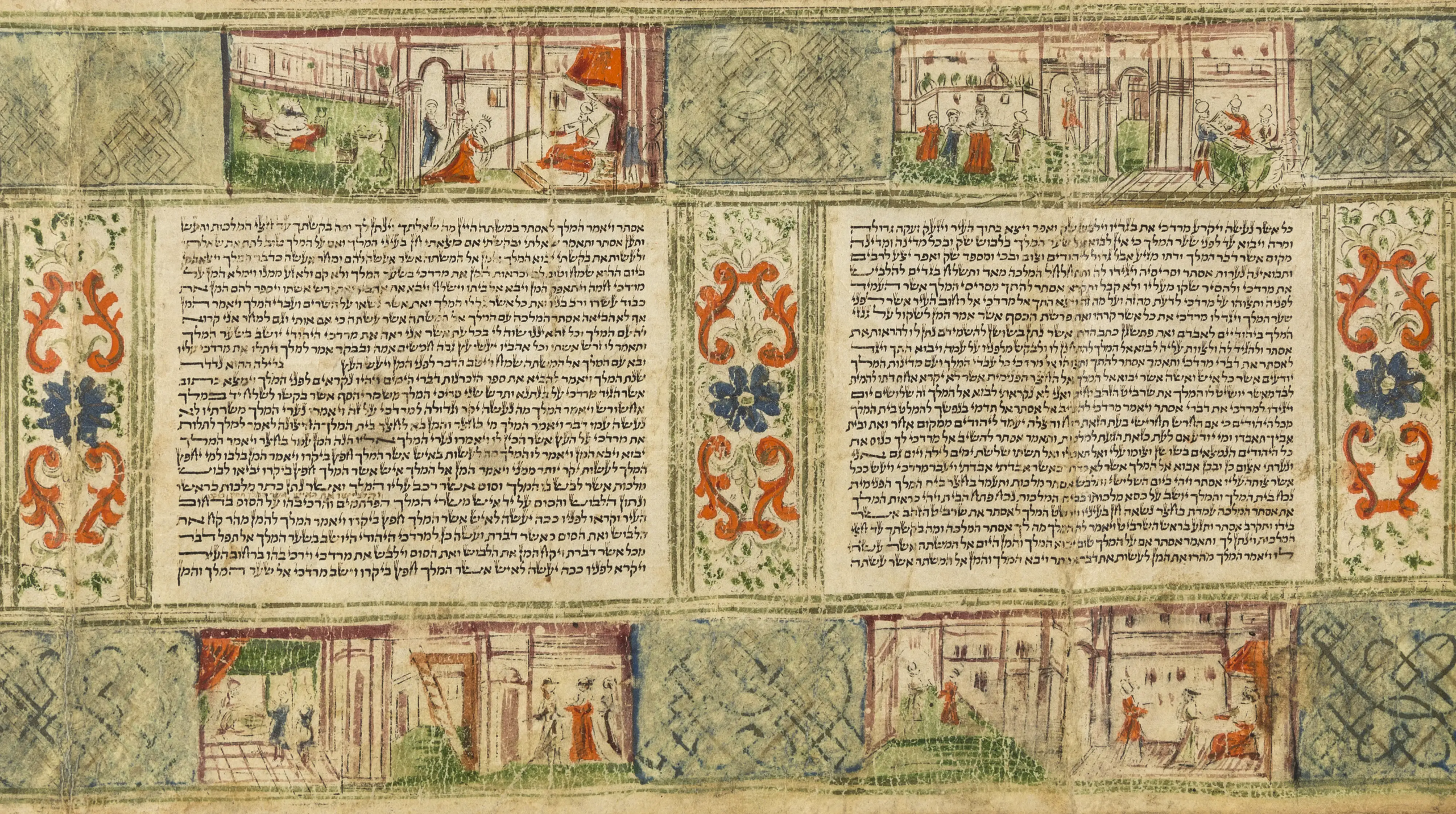
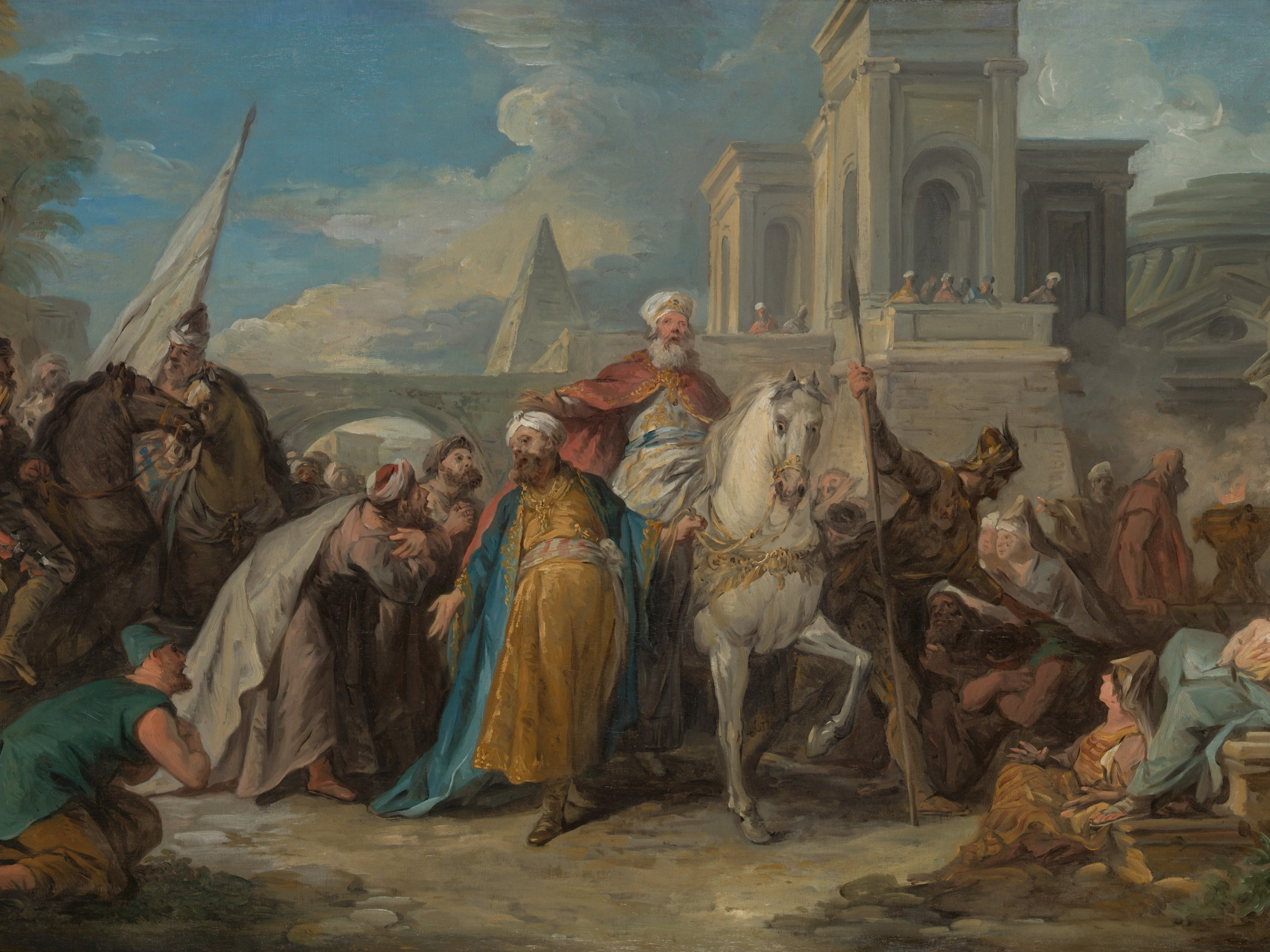
I know I say this sort of thing a lot, but Esther is one of my favorite books in the Old Testament. It is an exciting story about interesting people who are living through a unique moment in the history of the nation of Israel. Esther herself is a fascinating person with a lot of lessons to teach us, and her book is one of those stories that I find easy to get lost in reading.
One of the pieces of trivia that often comes up about the book of Esther is that it is the only book in the Bible with no direct references to God. While the presence of God looms large in the background over the book, nobody mentions him by name, and there are no prophecies, visions, or miracles anywhere in the text. It is a story about people who are living lives very much like our own, where their faith in God depends not on physical proof of God’s actions, but in their trust that God will fulfill his promises and provide for his people. These parallels make Esther easy to relate to and easy to draw out lessons from for ourselves.
However, because Esther has so few direct ties to the rest of the Old Testament, we often end up treating it as an “extra” book, one that has good lessons but which does not link directly to the New Testament gospel. I also used to have this view of Esther, but during some recent studies of the book, I have learned that there are actually some very strong connections to the New Testament in Esther, ones which have dramatically changed the way I see the book and which I hope to share with you.
Because there are so many things to talk about, today’s article is going to be the first of three discussing the different elements of New Testament foreshadowing that can be found in Esther.
Royal Robes, Crowned With Glory
The first New Testament foreshadow I want to talk about starts in chapter six of the book of the Esther. At this point, we have already met everyone in the story and have set up the stakes of the conflict. We have met Esther, the young woman who has been abducted from her people and forced to become the wife of the king of Persia. She is supported by her cousin and father-figure Mordecai, who gives Esther wise advice and previously saved the life of the king. Finally, we have the evil man Haman, a high-ranking Persian nobleman who schemes against the Jews to have them all put to death at the king’s order.
As we enter chapter six, we find Haman plotting to kill Mordecai, against whom he carries a particular grudge. In fact, we see in Esther 6:4 that Haman intends to do so that very day, the same day as when the king summons Mordecai into the inner court. Neither Mordecai nor Haman know why the king does so, or what the king’s intention is, but we are told that the king wants to reward Mordecai for saving his life.
Esther 6:2-4 (ESV) “And it was found written how Mordecai had told about Bigthana and Teresh, two of the king’s eunuchs, who guarded the threshold, and who had sought to lay hands on King Ahasuerus. And the king said, ‘What honor or distinction has been bestowed on Mordecai for this?’ The king’s young men who attended him said, ‘Nothing has been done for him.’ And the king said, ‘Who is in the court?’ Now Haman had just entered the outer court of the king’s palace to speak to the king about having Mordecai hanged on the gallows that he had prepared for him.”
Mordecai enters the palace that day as a man condemned to death. The gallows is already built, and Haman has already gained the trust of the king for exactly this moment. And yet, as we read the rest of chapter six, we know what actually happens instead: the king remembers when Mordecai saved his life, and orders Haman to clothe Mordecai in royal robes and lead him through the streets on the royal horse, proclaiming his honor to the whole city. Furthermore, in chapter seven, when Esther reveals Haman’s plans to the king, it is Haman who is hanged on the gallows instead of Mordecai.
Here is where we can start drawing out our New Testament parallels from the book. We have seen in the book of Esther that Mordecai was threatened with death on a gallows and was given a reprieve, and that instead of being put to death, he was rewarded by wearing the robes and crown of the king. In the New Testament, we see a similar story play out. Jesus was condemned and put to death on the cross, but was given his own reprieve when he was resurrected by God, and he was honored by being given authority over heaven and earth. Both were sentenced to be killed on a tree, and both were saved and honored with the royal crown.
Esther 6:7-8 (ESV) “And Haman said to the king, ‘For the man whom the king delights to honor, let royal robes be brought, which the king has worn, and the horse that the king has ridden, and on whose head a royal crown is set. Then let this robe and horse be delivered to the hand of one of the king’s most noble princes, that he may array the man whom the king delights to honor. Then parade him on horseback through the city square, and proclaim before him: ‘Thus shall it be done to the man whom the king delights to honor!’’”
Matthew 28:18 (ESV) “And Jesus came and said to them, ‘All authority in heaven and on earth has been given to me.’”
Hebrews 2:9 (ESV) “But we see him who for a little while was made lower than the angels, namely Jesus, crowned with glory and honor because of the suffering of death, so that by the grace of God he might taste death for everyone.”
Ephesians 1:19-23 (ESV) “…and what is the immeasurable greatness of his power toward us who believe, according to the working of his great might that he worked in Christ when he raised him from the dead and seated him at his right hand in the heavenly places, far above all rule and authority and power and dominion, and above every name that is named, not only in this age but also in the one to come. And he put all things under his feet and gave him as head over all things to the church, which is his body, the fullness of him who fills all in all.”
In Esther, we see Haman put to death on his gallows for his crimes, receiving the very punishment that he wanted to put on Mordecai. In the New Testament, we are similarly told that Jesus is not the only one who was put to death on the cross.
Esther 7:9-10 (ESV) “Then Harbona, one of the eunuchs in attendance on the king, said, ‘Moreover, the gallows that Haman has prepared for Mordecai, whose word saved the king, is standing at Haman’s house, fifty cubits high.’ And the king said, ‘Hang him on that.’ So they hanged Haman on the gallows that he had prepared for Mordecai. Then the wrath of the king abated.”
Romans 6:5-6 (ESV) “For if we have been united with him in a death like his, we shall certainly be united with him in a resurrection like his. We know that our old self was crucified with him in order that the body of sin might be brought to nothing, so that we would no longer be enslaved to sin.”
Romans 5:9 (ESV) “Since, therefore, we have now been justified by his blood, much more shall we be saved by him from the wrath of God.”
When we join ourselves to Christ in baptism, we put to death the “man of sin” so that we can begin living a new life. Just as Mordecai escaped death and Haman found it on the gallows, so also Christ was glorified through his death on the cross and our sinful lives are destroyed on it, allowing us to be set free from the schemes of sin. Finally, just as the death of the sinful man in Esther abates the wrath of the king, so too are we reconciled from the wrath of God when we put our old self to death on the cross.
Dead To Sin, Alive to God
What we see here in chapters 6 and 7 of Esther is a fascinating parallel to Jesus’ death and resurrection. We know that the story of Esther does not end here, and we will return to consider what Esther and Mordecai do after Haman’s death and how that relates to the New Testament in the next article. Likewise, neither does our story end with putting to death the man of sin on the cross. In Romans 6, right after Paul tells us about how our old self was crucified with Christ, he also tells us what that means we must do next.
Romans 6:10-13 (ESV) “For the death he died he died to sin, once for all, but the life he lives he lives to God. So you also must consider yourselves dead to sin and alive to God in Christ Jesus. Let not sin therefore reign in your mortal body, to make you obey its passions. Do not present your members to sin as instruments for unrighteousness, but present yourselves to God as those who have been brought from death to life, and your members to God as instruments for righteousness.”
When we see the story of Jesus foreshadowed in places like Esther, we are also seeing a form of the life that God now wants us to live in Jesus’ image. Just as Mordecai went on from his salvation to serve God faithfully, we also must go on to live our lives in righteous service to God, remembering the sacrifice that was made so that we can do so.